
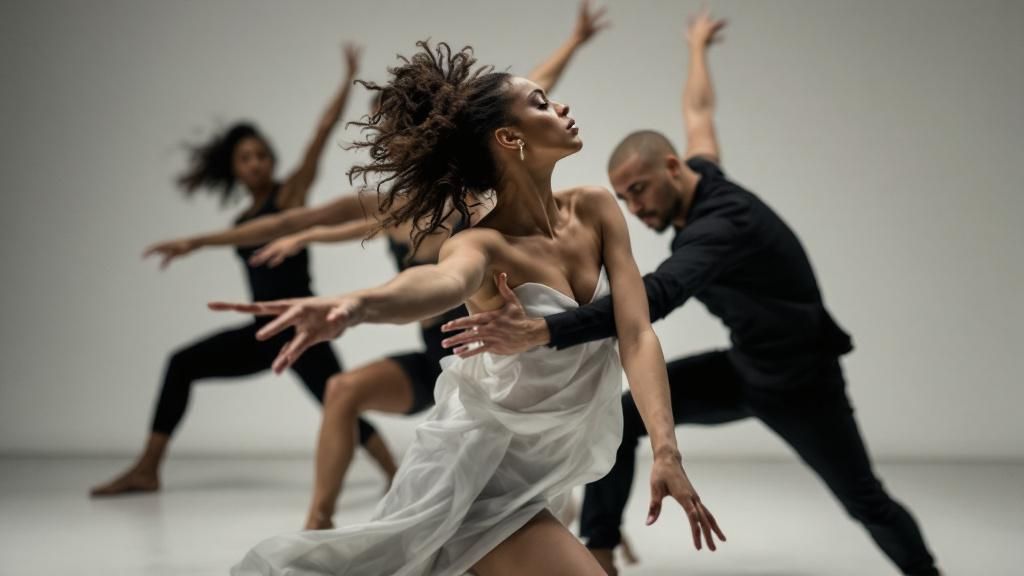
In a notable boost for the contemporary dance landscape, Arts Council England has provided substantial funding to innovative dance companies transcending traditional boundaries through blended artistic exchange. These innovative ensembles are redefining choreographic expression by combining different artistic practices, challenging conventional choreography, and building authentic conversation between cultures. This article examines how these innovative ensembles are redefining contemporary British choreography, the innovative initiatives their funding facilitates, and why such creative partnerships matter in today’s increasingly interconnected world.
Fostering Creative Excellence in Modern Dance
Arts Council England’s commitment to funding cutting-edge dance companies reflects a wider acknowledgement of modern dance’s key contribution in cultural communication and community involvement. By investing in companies that emphasise cross-cultural fusion and collaboration, the council enables artists who challenge established norms and develop pioneering creations. This deliberate financial support enables performers and choreographers to explore ambitiously, establish new artistic languages, and stage productions that resonate with wide-ranging audiences across the United Kingdom.
The financial framework for modern dance has changed substantially, with heightened priority on supporting projects that showcase creative quality alongside social impact. Dance companies backed by Arts Council England are required to show creative innovation, inclusive practice, and dedication to nurturing new artists. These financial commitments not only support individual companies but also reinforce the wider landscape of UK modern dance, making certain that venues, audiences, and creative practitioners remain vibrant and engage in purposeful partnership.
Fusion Dance and Cross-Cultural Interaction
Fusion dance represents a dynamic approach to choreography wherein artists deliberately combine movement vocabularies from multiple cultural traditions. Rather than appropriating or casually mixing styles, these companies pursue respectful collaborative work that celebrates each tradition’s heritage and contemporary relevance. Through training sessions, residencies, and joint creation, dancers develop nuanced understandings of different movement philosophies, creating performances that highlight cultural plurality whilst promoting meaningful artistic conversation across communities.
Cross-cultural partnership transcends artistic practice to incorporate audience engagement and public involvement. Funded companies directly include practitioners from various cultural backgrounds in creative processes, ensuring authentic representation and genuine interaction. These initiatives dismantle cultural silos, confront stereotypes, and establish environments where diverse perspectives enhance artistic development. Such collaborative approaches create performances that cross geographical lines, speaking to shared human dimensions whilst honouring the particular features of individual cultural traditions.
Creating Sustainable Cultural Communities
Sustainability in the arts demands sustained funding in facilities, staff, and community ties rather than project-based funding models alone. Arts Council England’s support for fusion and cross-cultural dance companies highlights building robust organisational foundations that allow consistent artistic development and community involvement. By offering multi-year funding agreements, the council enables companies to recruit experienced staff, invest in training programmes, and develop meaningful partnerships with local communities, schools, and cultural organisations throughout their regions.
Creating long-term arts communities involves building networks of practitioners, audiences, and supporters who actively participate in dance’s development and promotion. Funded companies are encouraged to establish coaching initiatives, training initiatives, and shared collaborations that share resources and expertise across the sector. These linked connections enhance durability, promote new ideas through collaborative knowledge, and guarantee that contemporary dance continues to be inclusive and pertinent to communities across England. Supporting long-term development ultimately benefits society by supporting creative dynamism and creative opportunity for future generations.
- Creating apprenticeship schemes for emerging dance practitioners and choreographers
- Creating inclusive shows through subsidised tickets and community screenings
- Building partnerships with schools and universities to incorporate dance into course programmes
- Developing professional networks that enable information exchange and collaborative opportunities
- Establishing mentorship programmes linking experienced professionals with emerging talent
Impact and Future Opportunities
The grants awarded by Arts Council England is creating substantial artistic influence across the nation’s dance sector. These forward-thinking organisations are establishing work possibilities for diverse artists, technicians, and collaborators whilst establishing fresh viewership for contemporary dance. Their intercultural initiatives are promoting greater understanding and appreciation amongst communities, removing cultural barriers through creative movement and performance. The broader consequences extend beyond performance venues, motivating educational institutions and grassroots organisations to embrace fusion approaches in their own artistic pursuits.
Looking ahead, these financed projects establish British dance at the vanguard of global artistic innovation. The companies are establishing enduring structures for international collaboration, creating pathways for developing practitioners to develop fusion methodologies. Forthcoming possibilities include increased performance tours, digital platforms extending reach beyond established performance halls, and apprenticeship schemes supporting the emerging wave of cross-cultural choreographers. Such investments reflect Arts Council England’s dedication to ensuring British dance stays dynamic, welcoming, and adaptable to our increasingly multicultural society.
